
Power BI Energy Sector Reporting: Production Variance by Site
Energy companies — hydro, solar, wind, gas — deal with production variance every single day. Comparing today's output vs yesterday's, this month vs last year, site A vs site B. Power BI handles the data scale. But when the operations team needs to restructure that view or add a YoY column, they're waiting for IT. Here's how to change that.
In this article
1. Energy Sector Power BI Use Cases
Power BI is widely adopted in the energy sector for operational reporting across generation, transmission, distribution, and trading. Common variance analysis needs include:
☀️
Solar Generation
DoD and MoM output variance by plant and inverter. Compare actual vs forecast generation — spot underperforming assets before they affect revenue.
💨
Wind Operations
Turbine output DoD variance by site and wind farm. Identify availability losses and capacity factor changes vs same period last year.
💧
Hydro Production
MoM and YoY generation by reservoir and turbine unit. Compare current water year vs historical — critical for planning.
⛽
Gas & Thermal
Heat rate variance, fuel cost MoM by unit, and dispatch schedule variance vs day-ahead plan.
2. Why Variance Analysis Is Critical in Energy Operations
In energy operations, variance isn't just a reporting metric — it's an operational signal. A 10% drop in DoD output from a wind turbine might indicate a fault requiring immediate maintenance. A 15% MoM increase in fuel costs per MWh may signal an inefficiency in dispatch planning. Catching these signals quickly matters.
The challenge: operations managers need to explore this data dynamically — pivoting by site, technology, period, and unit — not just view a fixed dashboard. When every "show me this by country instead of technology" request requires a developer, the operational value of the BI tool degrades rapidly.
| Site | Jan 2026 | Jan 2025 | YoY MWh | YoY % |
|---|---|---|---|---|
| Site A — Solar | 4,820 MWh | 4,210 MWh | +610 | +14% |
| Site B — Wind | 9,140 MWh | 10,220 MWh | -1,080 | -11% |
| Site C — Hydro | 12,300 MWh | 11,800 MWh | +500 | +4% |
3. Self-Service Variance for Energy Operations Teams
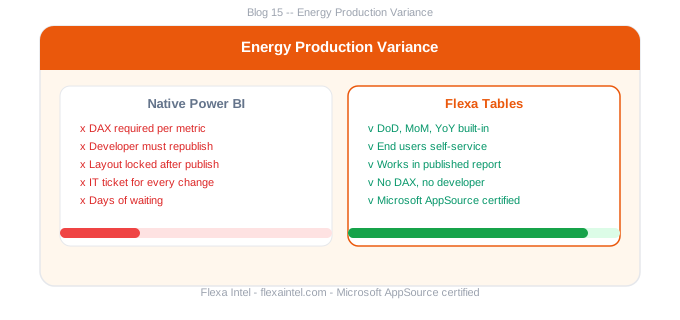
Flexa Tables gives energy operations teams the self-service variance capability they need:
- DoD output monitoring: Operations managers compare today vs yesterday by site, technology, and unit — without filing a ticket for a new DAX measure
- MoM and YoY generation variance: Quarterly and annual performance reviews with period comparisons end users add themselves
- Flexible dimension grouping: Switch instantly from "by site" to "by technology" to "by country" — all self-service in the published report
Energy teams: try self-service variance reporting
Flexa Tables on AppSource — free trial, Microsoft certified.
Get Free Trial on AppSource →How do energy companies use Power BI for production variance analysis?
Energy companies use Power BI to compare generation output by site, technology, and period — tracking DoD output vs yesterday, MoM vs last month, and YoY vs the same period last year. Natively, these require DAX time intelligence measures. Flexa Tables provides built-in DoD/MoM/YoY variance that operations teams activate themselves in the published report without IT.
Flexa Intel Team
Power BI Custom Visuals — flexaintel.com
We build Microsoft-certified Power BI visuals for analysts and finance teams.


