
NextEra Energy: Shifting Power – Global Renewable Energy Transition Dashboard Insights (2003–2024)
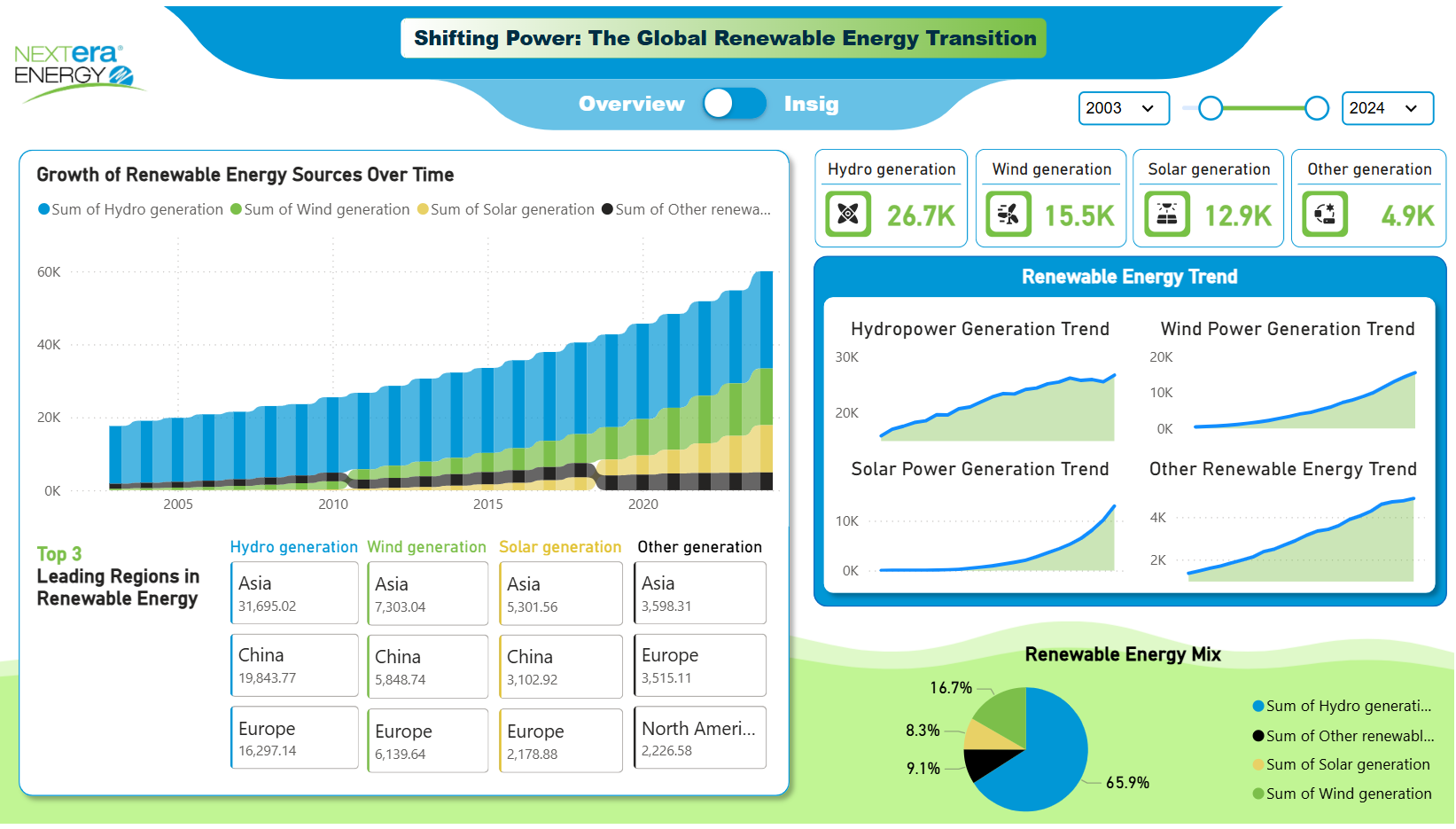
Overall Growth and Current Capacity
- Total Renewable Generation Capacity: ~55K (likely GW or similar unit) by 2024.
- Hydro: 26.7K (48%)
- Wind: 15.5K (28%)
- Solar: 12.9K (23%)
- Other renewables (bio, geo, etc.): 4.9K (9%)
- Stacked area chart shows steady exponential growth since ~2010, with hydro historically dominant but wind and solar rapidly closing the gap.
Renewable Energy Mix (Current Share)
- Hydro: 65.9% (still the largest single source)
- Wind: 16.7%
- Solar: 9.1%
- Other: 8.3% → Despite fastest growth in wind and solar, hydro remains the backbone of global renewables.
Individual Source Trends
- Hydropower: Long-established, steady growth with a plateau in recent years.
- Wind Power: Strong linear growth, accelerating post-2015.
- Solar Power: Classic exponential curve – slow until ~2015, then sharp takeoff.
- Other Renewables: Gradual but consistent increase.
Top Leading Regions (by Capacity)
| Rank | Hydro | Wind | Solar | Other |
| 1 | Asia (31.7K) | Asia (7.3K) | Asia (5.3K) | Asia (3.6K) |
| 2 | China (19.8K) | China (5.8K) | China (3.1K) | Europe (3.5K) |
| 3 | Europe (16.3K) | Europe (6.1K) | Europe (2.2K) | North America (2.3K) |
→ Asia (especially China) completely dominates across all renewable categories. → Europe is a strong second in most sources, particularly wind and “other”.Key Takeaways
- Asia/China Leadership: The global renewable transition is overwhelmingly driven by Asia, with China alone accounting for a massive share in hydro, wind, and solar.
- Diversifying Mix: While hydro still dominates (66%), wind + solar now represent ~26% and are growing fastest – signaling a shift toward variable but scalable sources.
- Exponential Late Bloomers: Solar and wind have driven most of the growth since 2015, reflecting falling costs and policy support.
- Regional Concentration: Unlike fossil fuels (spread across Middle East, Russia, US), renewables are heavily concentrated in Asia, creating new geopolitical/energy-security dynamics.
Recommendations
- Investment Focus: Prioritize wind and solar projects in Asia (especially China partnerships) for highest growth impact, while maintaining hydro assets for baseload stability.
- Policy Advocacy: Support continued subsidies and grid upgrades for variable renewables to accelerate the ongoing shift away from hydro dominance.
- Risk Mitigation: Diversify beyond Asia-heavy exposure by boosting Europe and North America wind/solar pipelines.
- Technology Push: Scale storage solutions (batteries, pumped hydro) to complement rapid wind/solar growth and ensure grid reliability.
Overall: The global renewable sector is in strong exponential growth phase, led decisively by Asia/China, with wind and solar rapidly gaining ground on traditional hydro dominance – a clear sign of successful cost declines and policy effectiveness in the energy transition.
Reviews
No reviews yet — be the first to review this template.
Other Templates
If you find this website helpful, share it with friends and colleagues to boost their Power BI skills and work efficiency!
Like this site? Share it