
Chevron Crude Oil Price Dashboard – Key Insights (2023–2025)
962 Downloads
Description
Overall Price Performance
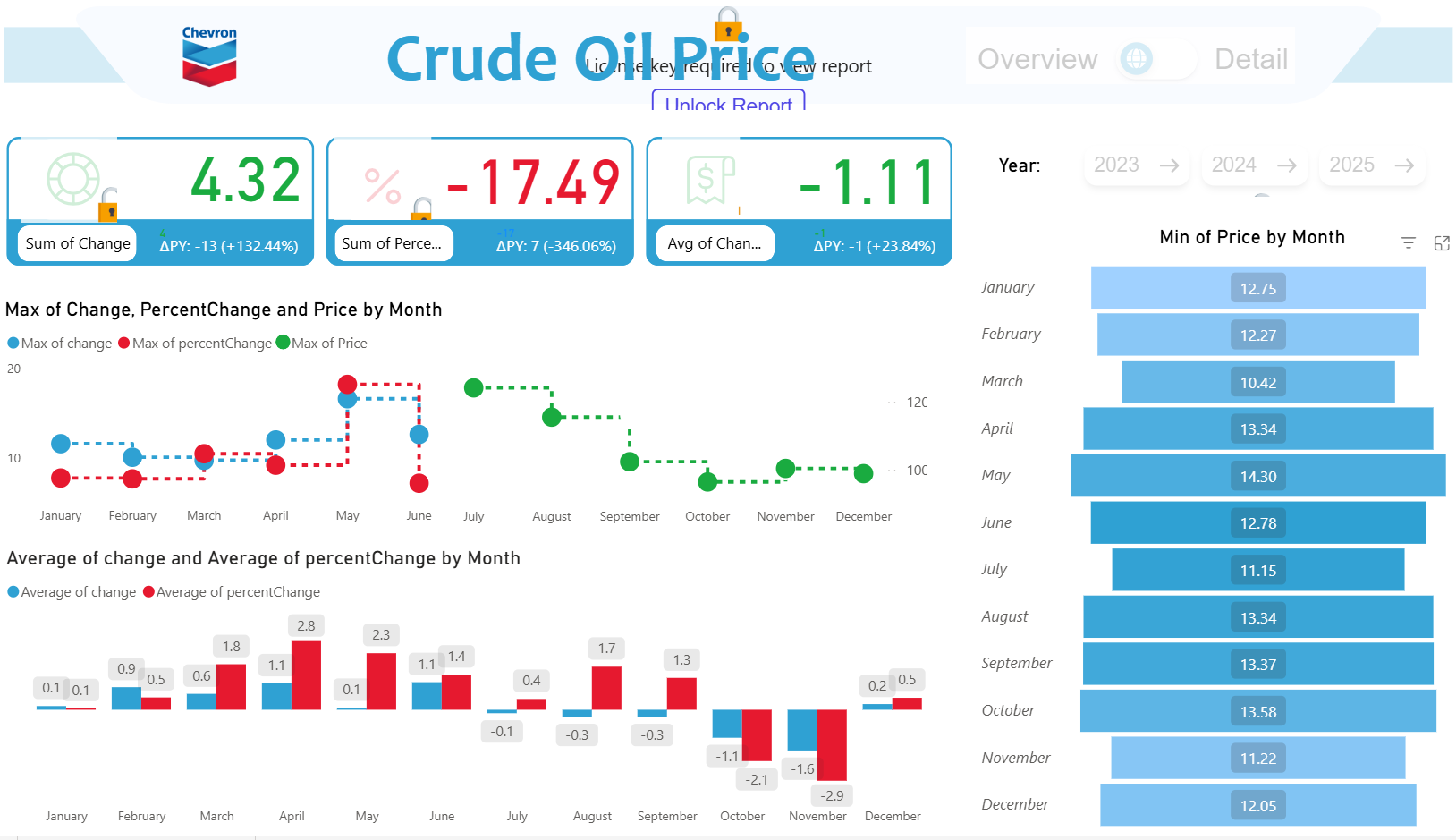
- Sum of Change (ΔPY): +4.32 (Year-over-Year increase of +132.44% from previous period)
- Sum of Percent Change: –17.49% (significant YoY decline)
- Avg of Change (ΔPY): –1.11 (average monthly change of –23.84%) → Mixed signals: strong cumulative gain in absolute price change, but sharp percentage declines suggest high volatility and a downward trend in recent momentum.
Monthly Price Levels (Min of Price by Month)
- Highest: May – 14.30
- Lowest: March – 10.42
- Year-end trend: Prices declined toward December (12.05), with a notable drop in November (11.22) → Seasonal pattern with spring/early summer peak, followed by gradual softening through year-end.
Max Change, Percent Change, and Price by Month
- Largest positive price changes: Early months (January–May)
- Sharpest declines: Late year (October–December)
- Percent changes highly volatile, peaking positively mid-year but turning deeply negative in Q4
Average Change and Percent Change by Month
- Strongest positive average changes: March–May (~1.1–2.3)
- Deepest negatives: November (–2.9), October (–2.1), December (–1.6) → Consistent pattern of Q2 strength and Q4 weakness in both absolute and percentage terms.
Key Takeaways
- High Volatility: Extreme swings in both absolute (+132% cumulative) and percentage (–17.49%) changes indicate a turbulent market influenced by geopolitical events, demand shifts, or supply disruptions.
- Seasonal Cycle: Prices typically peak in spring/early summer (May high of 14.30) and weaken significantly in late fall/winter – classic pattern tied to driving season, refinery maintenance, and heating oil demand transitions.
- Downward Momentum in Late Year: Q4 consistently shows the largest negative changes, suggesting structural oversupply, weakening demand, or inventory builds at year-end.
- Mixed Recovery Signals: While cumulative change is positive, average monthly performance is negative – implying short-term rallies within an overall softening trend.
Recommendations
- Hedging Strategy: Lock in forward sales during Q2 peaks to protect against predictable Q4 declines.
- Inventory Management: Build strategic reserves in low-price late-year periods and draw down during high-price spring/summer.
- Monitor Macro Drivers: Track OPEC+ decisions, geopolitical risks, and global demand (especially China/Asia) as primary volatility sources.
- Scenario Planning: Prepare for continued high swings – stress-test operations for both $10 and $15+ price scenarios.
Overall: Crude oil prices exhibit strong seasonal behavior with spring highs and winter lows, overlaid on a volatile multi-year trend showing absolute gains but recent percentage weakness – vigilance on Q4 softening and macro risks remains essential.
Reviews
No reviews yet — be the first to review this template.
Other Templates
Free Operations & Production
Free Operations & Production
Free Operations & Production
If you find this website helpful, share it with friends and colleagues to boost their Power BI skills and work efficiency!
Like this site? Share it